
 English
  Русский
  Deutsch
 Education
1987 - 1991 Ilya Efimovich Repin Art College, Chișinău, Moldova, Moldova
1984 - 1987 A. Shchusev Art School, Chișinău, Moldova, Moldova

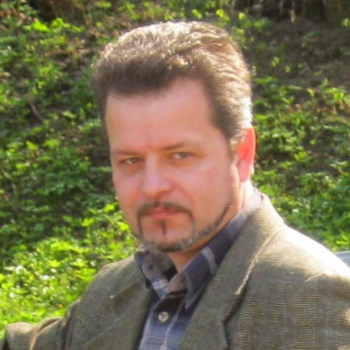
The artist's biography in the article "Man as the Meaning of Art. Artist Viktor Arseni"
From the literary and social journal "Voice of the Epoch," Issue 1, 2018
"For me, MAN is not a staffage figure among skyscrapers or a striking splash of color on green grass. For me, MAN is the CENTER OF THE UNIVERSE! MAN is the meaning and purpose of my art!
It is very difficult to convey on canvas the materiality of precious metals, luxurious fabrics, the smooth surface of water, and the delicacy of women's skin, but that's not what I pray for; it's simply a matter of technique!
There are heights that cannot be reached even by slave labor— the ability to deeply feel and understand human souls and know how to subtly and precisely express these feelings on canvas— and that's precisely what I pray for!"—this is how artist Viktor Fyodorovich Arseni speaks of his work.
Viktor Fedorovich was born in 1969 in Chisinau. He graduated from the A. Shchusev Art School and the I. Repin Art and Pedagogical College.
After graduating from art school, he was invited to work at the A. Pushkin State Art Museum of Moldova. From 1991, Viktor worked as an art restorer at the State Art Museum of Moldova.
In 1993, he was one of the founders of a permanent painting exhibition and sale in the center of Chisinau, often called the "Chisinau Arbat."
During his studies, thanks to the influence of N.A. Vasilyeva, a teacher at the Shchusev School, Viktor Fedorovich developed a special love for 19th-century Russian painters, who became his role models.
After serving in the army, Arseni returned to his hometown and devoted himself to artistic creation. His genres are quite diverse – illustrations, graphics, landscapes, multi-figure compositions, portraits…
Portraits, painted with photographic precision, occupy, perhaps, the most important place in Viktor Fedorovich's work. "As a portraitist, I subordinate everything in the painting to the image I'm painting! Everything must work – clothing, background, colors, techniques, spots, composition – everything for the sake of looking deeper and discovering more secrets! If something is even simply neutral, I remove it without mercy," the artist says.
He is no less meticulous about his other works, especially his genre paintings. "After finishing each painting, I always have a burning feeling – was it a success, or not!" Arseni admits. "And I only calm down when I tell myself that 'LET IT BE THIS WAY FOR NOW,' like a sketch for a future painting. Only then does the PAINTING, having taken from me, as it were, a promise to continue, release its tight grip on my throat and soul!
Maybe that's why I paint from my own drawings and illustrations—I fulfill the promises I made to my drawings—fragments of my soul and heart!
And it's amazing how, by giving away a piece of my soul, the SOUL becomes even larger and purer!
Lord!!! Great is Your power!"
Religious and historical themes noticeably dominate Viktor Fedorovich's work. "The Second Appearance of Jesus Christ," "Our Daily Bread. Easter or the Resurrection of Christ in Moldova," "The Elder and the Angel," "The Repentance of a Monk"—these and other works are imbued with deep faith and executed in the strict tradition of classicism. Classicism is a distinctive feature of all of Arseni's paintings. The influence of 19th-century Russian artists is clearly felt in them. Viktor Fyodorovich's works bring to mind the paintings of A. Ivanov, K. Bryullov, G. Semiradsky, and others.
Arseni depicted episodes from Moldova's military history in his paintings. "Peter I and the Ruler of Moldova, Dimitrie Cantemir, in the Battle for Moldova, Against the Turks and Tatars, 1711," "The Appearance of St. George the Victorious, Patron Saint of the Moldovan Army, in the Battle of Vaslui, January 10, 1475," "The Battle of Cahul," "The Repentance of a Janissary at His Father's Grave"... The last work must be considered the most poignant in this cycle. It is poignant in its depiction of Repentance, which, according to the artist, became the painting's main theme. "Everyone has their own path to truth, full of doubts and mistakes. Even the Apostle Peter betrayed Jesus three times!" the artist reflects. "But the Lord forgives even the most hardened criminal. REPENTANCE, sincere and complete—that is the path to truth! And not the desire to be a judge, or a priest, or a preacher, edifying everyone and everything, while failing to see the beam in one's own eye! And certainly not persisting in one's mistakes and justifying one's crimes!!! The main thing is that REPENTANCE be sincere and without fanaticism, BETWEEN YOU AND HIM, otherwise it's a road to nowhere!"
Particularly noteworthy in Viktor Fyodorovich's work are his works on contemporary themes. Unfortunately, contemporary artists rarely address them. Perhaps because our time doesn't offer such rich subjects as our history... But it has its share of tragedies and heroic deeds.
“To tell you the truth, I’ve been trying to paint Joyful, Cheerful, Optimistic pictures for a long time now, and at first everything usually goes well… But the more deeply and honestly I study and depict the theme I’ve started, analyze the nuances, look for cases from real life – I realize that of the three words, only the third one, “Optimism,” can be a stretch to describe the picture.”
Or hope, more often in God, sometimes in the fact that maybe our children will be happier than us, for which, like normal parents, we are ready to sacrifice everything, even our lives, as in war. So it turns out that I write either a drama or the struggle for survival of the people around me, mainly my beloved Moldovans, of course, although we are all the same people, albeit with different customs. Well, I dug into this topic of migrant workers, because here in Moldova, like during the Great Patriotic War, if you walk through the villages, you mostly see only old people and children – everyone has gone abroad to work, some more fortunate, but most of the time not. And if someone returns, it's a real celebration, but… human trafficking remains the most profitable business worldwide after drugs and weapons. "According to the International Organization for Migration, the largest number of sex slaves come to Europe from post-Soviet countries, with Moldova leading the way at 40%, and Ukraine in second place at 11%... I dug into it, so to speak, like a true realist of the heroic-dramatic genre, as I was taught... to the point of tears..." - this is the author's annotation to Arseni's film "The Return of a Moldovan Woman Home from Turkish Slavery. Hooray, Mommy Has Arrived!" Happy children, the colorful colors of a sparsely but festively decorated room, a sorrowful father and mother, and the frozen, tear-stained face of a woman who has returned from slavery as she embraces her youngest daughter...
And here's another painting – "Moldovan Children Earning for School"... And two more adjoin it: "Orphan from Chisinau" – a homeless boy sleeping on a snowy threshold, awaited upon awakening by his faithful violin with music and an equally homeless dog; and "Prayer on the Islet of 'Hope,' in the Midst of the Lake of 'Tears,' in the Land of 'Suffering' and in the World of 'Indifference.' Orphan from the Orphanage of Bălți, Moldova" – a poignant image of an orphan boy, whose infinitely sad gaze is unlikely to leave any viewer indifferent...
Author: E. V. Semenova
Article: "Man as the Meaning of Art. Artist: Viktor Arseni"
From the literary and social journal "Voice of the Epoch," issue 1, 2018
интро текст для новостей
Get access to special offers, exclusive promotions, and unique promo codes available only to our subscribers. Along with that, stay updated on the latest global art news and receive fresh insights and announcements from Baranow Art Gallery.